Anita Say Chan reveals how new surveillance technologies employed by DHS and ICE to monitor, arrest, and deport immigrants have a long history rooted in eugenics profiling from the 19th and 20th centuries.
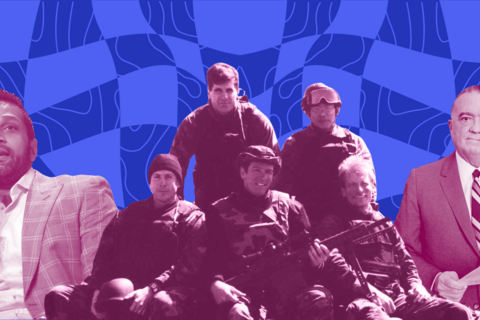
Faith Lazar details the history of the U.S. Right’s relationship to the FBI and the security state, from the early days of the Red Scare and pro-government conservatives to the anti-state militias that arose in the aftermath of Waco.
Artificial Intelligence is exacerbating a problem that marginalized communities have been warning us about since the dawn of social media: far-right disinformation.
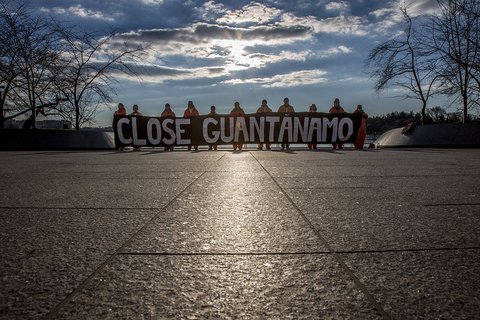
Since 9/11, anti-Muslim racism and state violence enacted on Muslims has been a core component of the U.S. security state and altered the very nature of surveillance and policing at home and abroad. And through it all, Big Tech has profited.
The anti-immigrant movement mobilized before 9/11 but used the fuel of the anti-immigrant policies and rhetoric post 9/11 to become the movement they are today.
In the wake of four years of far-right populist governance culminating in a violent insurrection, PRA is holding steady in the knowledge that it’s not over yet. Join PRA for a five-part webinar series as we evaluate the state of the Right.
Right now, we are living in a global period of democratic decline and the rise of authoritarianism. From Moscow to Manila, from Brasilia to Budapest, from Warsaw to Washington, D.C., authoritarian…
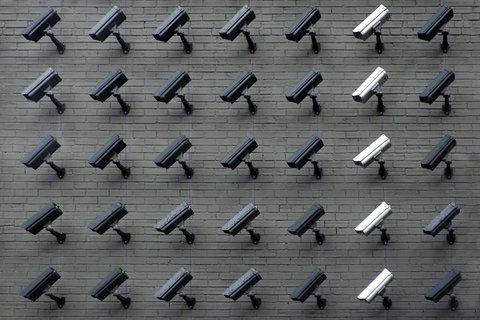
Simone Browne, an associate professor of African and African Diaspora Studies at the University of Texas at Austin, describes her new book, Dark Matters: On The Surveillance of Blackness, as a conversation between Black Studies and Surveillance Studies—the latter a young discipline devoted to investigating the technological and social dimensions of surveillance.
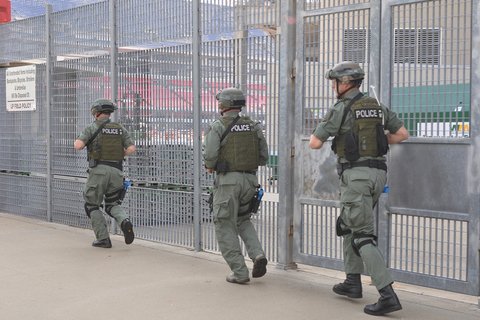
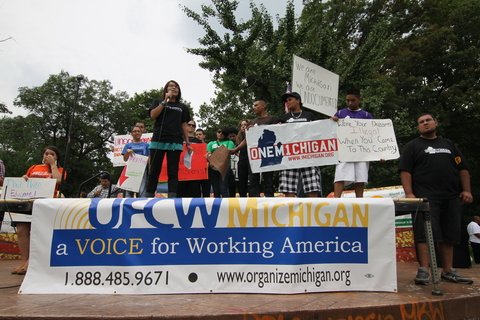
The new Fusion Center in Michigan coordinated the national security intelligence efforts for law enforcement departments, threatening marginalized communities.