She’s got everything delightful, she’s got everything I need, A breeze in the pines and the sun and bright moonlight, lazing in the sunshine yes indeed. ~ “Sugar Magnolia” My childhood home was…
Much of the coverage of Turkey can be politely described as ‘trampoline journalism’—bounce into Taksim and bounce out. What I saw in Istanbul didn’t match the feverish descriptions that made it even onto the BBC or that clogged up my Twitter feed. More relevant to me, almost no one was interested in hearing from religious Turks. So I went ahead and talked to them.
The tragedy of a dictatorship is that they so eviscerate their countries that, even after they are gone, it’s hard for people to pick up the pieces and move forward. But I am hopeful in seeing the banner of the pre-Qaddafi monarchy rooted in the Sufi orders that led the resistance to colonialism.
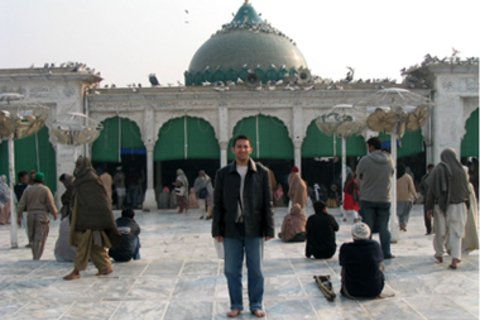
Since last week’s bombing, I’ve spent quite a bit of time reviewing old photographs from trips to Pakistan. In seeing pictures of the shrine pre-attack, and in vividly recalling crowds of peaceful worshipers congregating there, posing no discernible threat to anyone, I was nearly moved to tears.
Although I have become more cynical about the power of simply listening to music in the decade since I found the CD, I still had high hopes for the festival. As a festival for music, it was beautiful, but as a venue for intercultural understanding, I believe it missed the mark more than it hit it.
A new work advancing a radical theory of the motivation behind suicide bombers is almost bizarrely off the mark. Stitching together thought and observation from disparate and often dissonant sources, Georgetown theology professor Ariel Glucklich’s book would be laughable were he not a consultant to the defense community.
The best-selling poet in America today was born in Afghanistan, practiced a form of Islam that originated in Iraq, and has been dead for 800 years. How did a white man from Tennessee, who doesn’t read a lick of Persian, make Rumi accessible to mainstream America?