A month ago, I argued here on RD that America’s national conversation about Christianity is “fundamentally unserious.” Not because, as conservative Christian commentator Bonnie Kristian would have it…
As I’ve argued before, the United States, an ostensibly secular country, has a de facto Christian public sphere. When conservative, mostly white Christians make headlines for doing something illiberal…
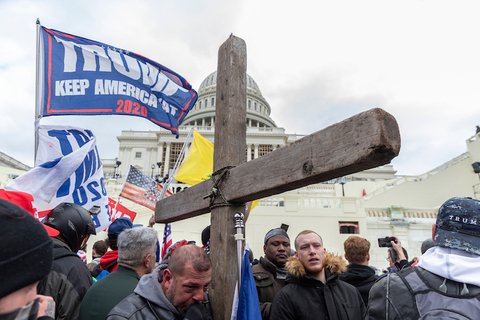
With white evangelicals, America’s most pro-Trump demographic, currently in the news for sex scandals , committing violence , and defending violence , we once again find the meaning of Christianity…
Christianity has long had a white supremacy problem. The Kenosha aftermath has just made it clear. GiveSendGo, a “Christian crowdfunding” site has raised more than $360,000 for Kyle Rittenhouse, the…
We are all like Sanders and other conservative white evangelicals insofar as we all have confirmation bias, making it difficult for us to accept evidence contrary to what we already believe, but the history and faith practices of white evangelicals offer an additional set of tools of belief.
Since Donald Trump started winning Republican primaries this winter, evangelical leaders have looked to absolve themselves of the taint that has come with the surprising news of his significant…
Despite the fact that, like Buddhism, Islam prohibits murder, the two are treated quite differently when it comes to its adherents committing acts of violence.
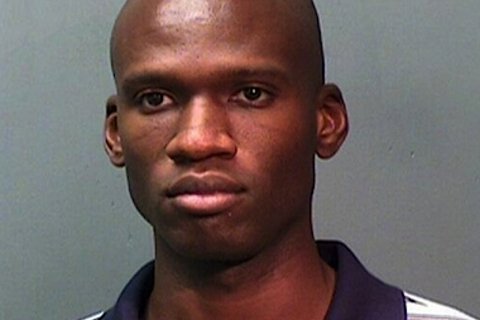
What seemed to propel the confusion saturating the media’s initial coverage of Aaron Alexis was the role of religion and, more specifically, the profile on Buddhists. Why would a reporter expect a person of another religion to “pick up a weapon and kill twelve people,” but not a Buddhist?
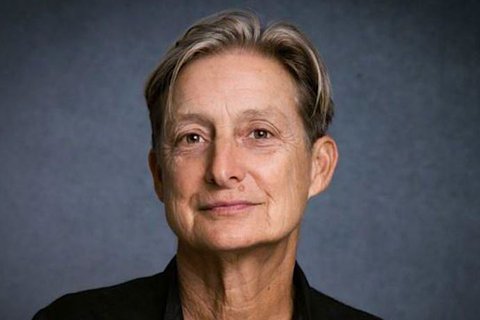
Parting Ways is Butler’s attempt to construct a Jewish narrative that coheres with her philosophical and political sensibilities as well as her allegiance to her Jewish heritage and lineage. As a Jew for whom religious practice and the Jewish textual tradition do not constitute her Jewish core, hers is a secular narrative of Jewishness outside the orbit of Zionism. Butler’s concern for Israel is that she believes its present construction is “Jewishly” indefensible (in the terms she develops in her book) and the muscularity with which Zionism is proffered squashes any alternative narrative of diasporic Jewish identity.
If Anders Behring Breivik isn’t a Christian terrorist, then the same can be said of Osama bin Laden and many other Islamist activists—whose writings show that they were much more interested in Islamic history than theology or scripture and imagined themselves as re-creating glorious moments in Islamic history in their own imagined wars.