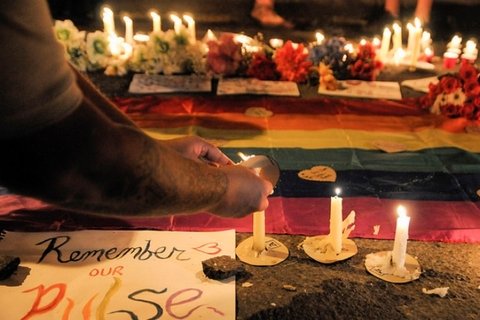
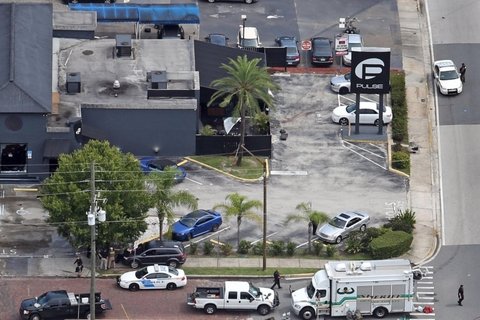
Queer spaces are sanctuaries. Sanctuaries are spaces of safety and freedom. When violence enters a sanctuary, that is a violation of sacred space. In the 1980s, as nearly a million Central Americans…
I don’t know how we ever forgot that we are graced with every breath of freedom we draw, with every step we take out on the street with our backs upright and our faces unashamed, with every kiss and…
Organizers of last month’s International Day Against Homophobia, Transphobia and Biphobia have published their report on this year’s celebrations around the world. ISIS claims responsibility in…
On Wednesday, December 2, 2015, Syed Rizwan Farook, 28, and Tashfeen Malik, 29, murdered 14 people and injured 21 during a targeted attack at Inland Regional Center in San Bernardino, CA. In the…
Despite the fact that, like Buddhism, Islam prohibits murder, the two are treated quite differently when it comes to its adherents committing acts of violence.
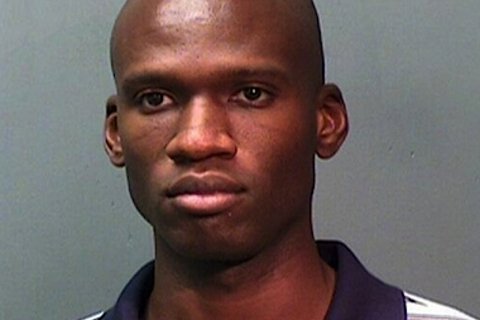
What seemed to propel the confusion saturating the media’s initial coverage of Aaron Alexis was the role of religion and, more specifically, the profile on Buddhists. Why would a reporter expect a person of another religion to “pick up a weapon and kill twelve people,” but not a Buddhist?
The recent spate of mass killers all sought to solve their problems with a certain expression of gun violence that maps easily onto the masculinist roots of Christianity and other religious traditions—particularly in more conservative expressions.
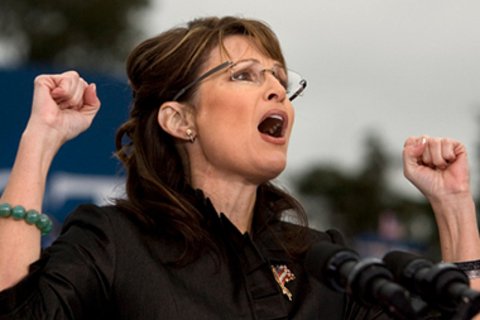
In a video released on her Facebook page, Sarah Palin insists that violent rhetoric plays no role in influencing actions while claiming that those condemning the use of angry rhetoric and images are themselves manufacturing a “blood libel” that may well “incite…violence.” So which is it?
How did we get to the point where the infringement of a religious obligation is constitutionally irrelevant despite the existence in the text of a constitutional protection of religion?