This memo will focus on how far-right movements may attempt to influence this period, what some analysts are calling the interregnum, and the likely consequences of their activities.
Recent developments in activity and rhetoric raise the possibility that some anti-government factions could morph into pro-Trump paramilitaries; a phenomenon we may see during this interregnum period.
A detailed guide and history of far-right militias and White supremacy groups in Nevada and toolkit for both citizens and public officials released on the eve of early voting for the 2020 election.
Ahead of November Election, Trump Inflames His Vigilante Base
During the first 2020 Presidential Debate, President Trump refused to denounce White supremacy and instead told far-right group the Proud Boys to “stand back and stand by,” once again mobilizing his militant base.
The Past and Present of the Polish March of Independence
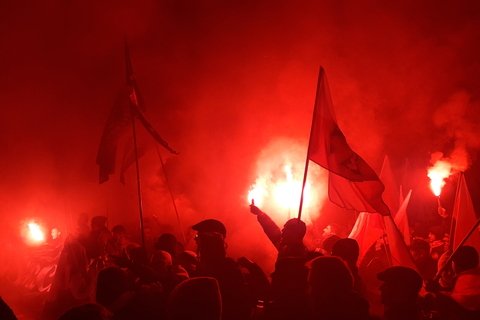
In the early afternoon on November 11, 2019, 250,000 people marched through the streets of Warsaw, intentionally and unintentionally participating in a March of Independence organized by far-right organizations and political parties.
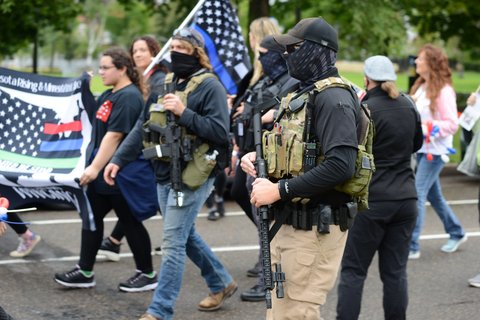
To keep our movements safe, we all need to better understand who these paramilitaries are, what threats they pose, and what to do when they are present.
Updated 10.27.21: PRA and Institute for Research and Education on Human Rights (IREHR) have created a map as a resource for activists, journalists and researchers, to place the threat of the far-right showing up at racial justice protests.
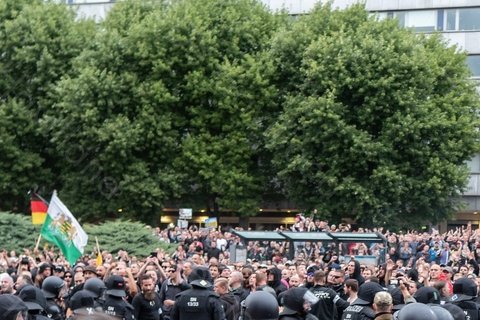
The 2018 anti-immigrant violence and mass demonstrations in Chemnitz, Germany was a result of steady, ongoing neonazi and fascist mobilization, and the untended traumas of Germany’s reunification.
On February 19, a 43-year-old man shot and killed nine people, including himself, in Hanau, Germany, a small city some 15 miles east of Frankfurt. The shooter left behind written and video testimony revealing connections to shared modes of thought.