
Here in the United States, rainbow flags are being unfurled across the country in honor of LGBT Pride Month. Meanwhile, in Brazil, fans from around the world are eagerly waving the flags of their countries and favorite teams in anticipation of the 2014 FIFA World Cup. Beyond the flag-waving and weeks of revelry, there may seem to be few connections between the two events, but the U.S. A movement that emerged in the 1970s encompassing a wide swath of conservative Catholicism and Protestant evangelicalism. Learn more will be tracking the events in both San Francisco and Rio de Janeiro very closely.
As with many major sporting events, preparations for the World Cup have been accompanied by lots of media hype about the supposed surge in sex trafficking that plagues these gatherings. Texas Attorney General Greg Abbott has claimed that the Super Bowl (featuring the other football) is the single largest sex trafficking incident in the United States. At a House Foreign Affairs Committee hearing about trafficking and sports events held on January 27, Rep. Chris Smith (R-NJ) cited a popular statistic from the National Center for Missing and Exploited Children, claiming that 10,000 prostitutes were transported to Miami for the 2010 Super Bowl.
Yet when questioned, researchers at the Center admit that they have no idea how Ernie Allen, the organization’s former president, derived the number. In fact, in a 2011 report examining the record on sex trafficking related to World Cup soccer games, the Olympics, and the Super Bowl, the Global Alliance Against Traffic in Women found that “despite massive media attention, law enforcement measures and efforts by prostitution abolitionist groups, there is no empirical evidence that trafficking for prostitution increases around large sporting events.”
“The Christian Right has identified the fight against human trafficking as an un-opposable mission by which it can covertly promote restrictive ideologies pertaining to sexuality and bodily autonomy.”
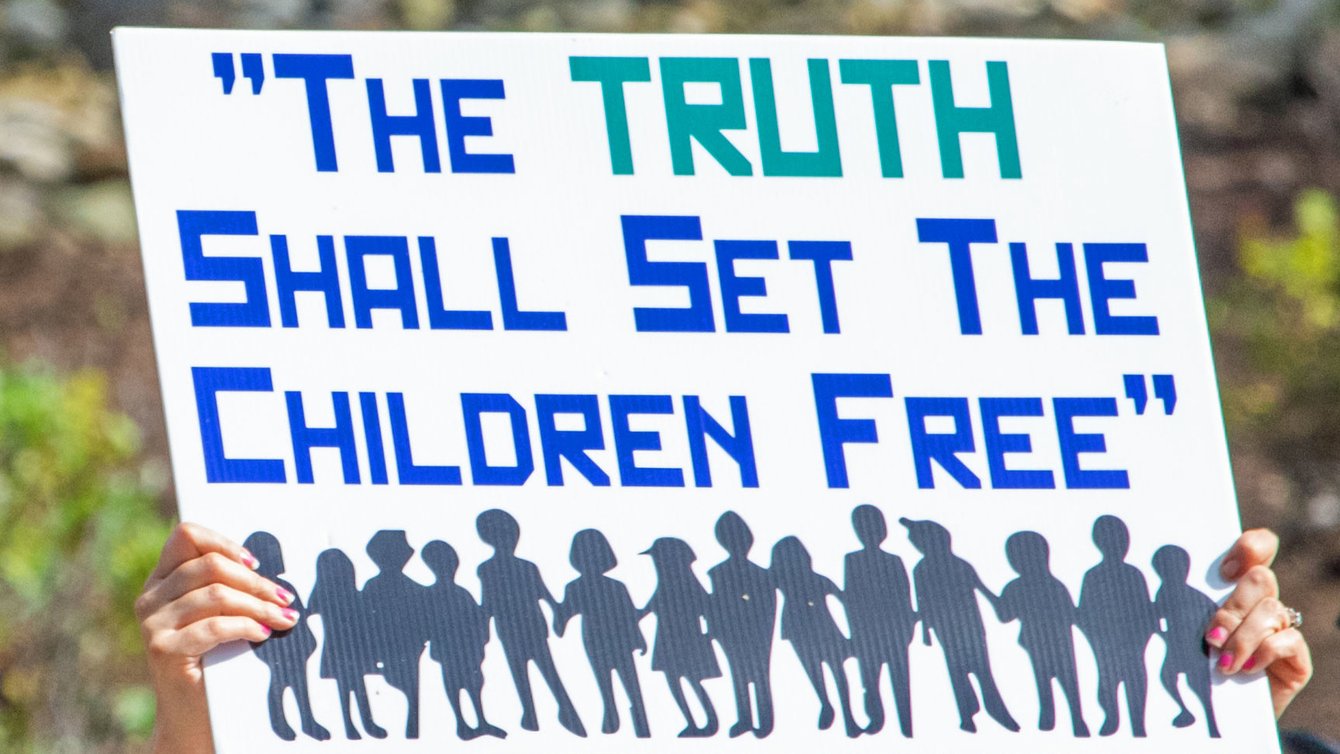
So what is the relationship between quests for athletic glory and hyperbolic increases in human trafficking? In short, the Christian Right has identified the fight against human trafficking as an un-opposable mission by which it can covertly promote restrictive ideologies pertaining to sexuality and bodily autonomy. While they purport to be nobly fighting the exploitation of young children and poor, defenseless women, Christian Right groups advance a surreptitious attack on some of the their favorite scapegoats: An umbrella acronym standing for lesbian, gay, bisexual, transgender, and queer or questioning. Learn more people – especially A term used for someone whose gender is not (exclusively) the one they were assigned at birth. Learn more women of color, who are disproportionately targeted by police and “anti-trafficking” efforts.
Consider Project ROSE, a “prostitution diversion” program jointly developed by 15 partner organizations, including the Phoenix Police Department, Arizona State University School of Social Work, and Catholic Charities (its primary funding source). During bi-annual stings, Project ROSE profiles and arrests suspected sex workers, forcing them into faith-based programs without due process or a conviction. Participants who don’t qualify (as was the case with Monica Jones) or refuse to participate in the program, are transferred directly into the criminal punishment system.
In a New York Times op-ed published earlier this year, Kate Mogulescu, the supervising attorney of a project at the Legal Aid Society that represents nearly all of the people arrested on prostitution charges in New York City, documented a massive increase in prostitution-related arrests in the lead-up to the 2014 Seattle/Denver Super Bowl showdown. But by the end of the weekend, not a single trafficker had been investigated or prosecuted. Ultimately, the anti-trafficking frenzy hurt the very people that advocates claimed to be protecting. Hundreds of sex workers–who are already vulnerable–found themselves facing jail time, potential deportation, warrants for failure to appear in court, and lifelong criminal records. As Mogulescu observes, “These arrests are not indications of an increase in prostitution activity, but rather of an increase in policing.”
“Conservative religious groups, lobbyists, and legislators have done little to curb the harmful elements of the sex trade.”
Certainly, the abuse, manipulation, and exploitation of others is unacceptable in any context, and should be confronted and stopped. Yet conservative religious groups, lobbyists, and legislators have done little to curb the harmful elements of the sex trade. Rather, they use anti-trafficking policies to maintain a righteous “tough on crime” image while ignoring the broader systemic issues that put people at risk for exploitation in the first place. The Right’s focus on sex trafficking has far more to do with restricting individuals’ bodily autonomy—and maintaining the poverty-induced subservience of already marginalized people—than with ending the exploitation of vulnerable populations.
As feminist scholar and activist Emi Koyama observes, the youth sex trade is fueled by a variety of “push” and “pull” factors independent of religious morality or women’s empowerment, including poverty, An ideology that assumes a hierarchy of human worth based on the social construction of racial difference. Racism as an ideology claims superiority of the socially constructed category, White, over other racialized categories based on the false idea that race is a fixed and immutable reality. Learn more , An ideology that assumes a hierarchy of human worth based on the social construction of gender difference. Learn more , A form of heterosexism that devalues and scapegoats gay, lesbian, and bisexual people and people in same-gender relationships. Learn more /transphobia, family violence, failure of the child welfare system, and the effects of incarceration and deportation on family cohesion. To be truly effective, efforts to combat sex trafficking and its associated human rights violations must be developed in partnership with sex workers and their allies. As Koyama points out, it is “workers organizing among themselves that [has] successfully challenged and transformed exploitative and abusive working conditions, not police officers or politicians.” (Or, I might add, the Christian Right.)